ABOUT THIS PODCAST
Dear One,
You are entering a space where the highest and purest frequency is transmitted not only through words, but through what can be sensed and felt. This is not simply something to read. It is to experience. Each word carries an encoded essence, designed to gently touch the somatic field within you and awaken deeper self-awareness.
Here you will receive real-time insights and teachings, hear the deeper journey behind the book, and explore wisdom around the nervous system, somatic physiology, generational wealth, multi-generational repair and restoration and feminine leadership. This space is an invitation to uncover your own path to sovereignty while being held within a community of like-minded women walking a similar path.
Intention for today's episode:-
Dear One,
You are entering a space where the highest and purest frequency is transmitted not only through words, but through what can be sensed and felt. This is not simply something to read. It is to experience. Each word carries an encoded essence, designed to gently touch the somatic field within you and awaken deeper self-awareness.
Here you will receive real-time insights and teachings, hear the deeper journey behind the book, and explore wisdom around the nervous system, somatic physiology, generational wealth, multi-generational repair and restoration and feminine leadership. This space is an invitation to uncover your own path to sovereignty while being held within a community of like-minded women walking a similar path.
Intention for today's episode:-
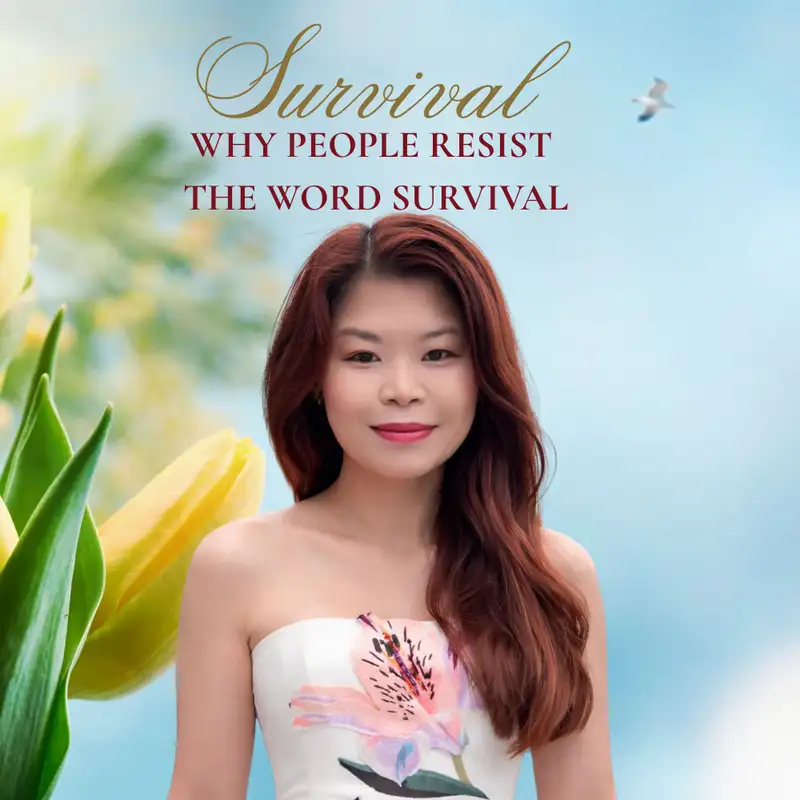
- Reactions to the Concept of "Survival" Among High-Functioning Women
- The term "survival" often triggers defensiveness, particularly among women who have built successful lives and strong identities around being “okay.”
- Survival is perceived as implying something is wrong, which poses a threat to the self-image of thriving and stability.
- The initial resistance commonly manifests as comparison ("others have it worse") or dismissal ("I’m just tired, it’s just a phase").
- Comparison as a Coping Mechanism
- Comparing oneself to others in more difficult circumstances is recognised as a survival strategy, which delegitimises one’s own pain.
- This strategy preserves self-concept but is ultimately harsh on oneself while being generous to others.
- The speaker differentiates between healthy gratitude and using gratitude/perspective/privilege to silence bodily signals or emotional truths.
- Body’s Role in Recognizing Survival
- The body does not interpret pain or stress through the lens of relative privilege; it only registers what is being carried, suppressed, or unexpressed.
- The "ledger" of the body is not moral; it simply records experience.
- Three Main Areas Women Protect by Resisting Survival
- Identity: Fear of invalidating past achievements and self-presentation if one acknowledges merely surviving rather than thriving.
- Naming survival doesn’t diminish accomplishments; it clarifies the context they were achieved in.
- Relationships: Concern over how admitting struggle would impact loved ones who depend emotionally on her perceived strength.
- Often, over-functioning women manage not just their lives but the emotional stability of those around them.
- Recognition may destabilize others but doesn’t make it wrong; it requires honesty.
- Agency: Apprehension that recognizing survival demands immediate action or change, which feels overwhelming or unmanageable.
- Resistance here is not denial but a rational weighing of what change would require.
- Recognition itself does not mandate immediate action; allowing oneself to acknowledge survival is a vital first step.
- Identity: Fear of invalidating past achievements and self-presentation if one acknowledges merely surviving rather than thriving.
- The Importance of Allowing Recognition
- Acknowledging the truth is significant, even if immediate change isn’t practical or possible.
- The body integrates such realizations slowly; it's important to let recognition settle without forcing swift decisions or actions.
- Survival is a descriptor, not a verdict; it initiates the possibility for reorientation, not condemnation.
- Reflection and Next Steps
- Encouragement to question where in life gratitude or perspective is being used to minimize personal experience—not to fix, but to simply acknowledge.
- Teaser for the next episode: exploring emotional addictions, chaos versus peace, and why calm can feel less safe than intensity.
- Resistance is not an enemy but a guardian; recognition should lead the process.
Go deeper:
Lilian’s Website:
https://www.la-maison-hii.com/
Her Reading Room
Lilian’s Instagram:
https://www.instagram.com/lilian.white.resonance/
Lilian’s Kindle Book.
Thank you for being here with me.
Heartitude,
Lilian